How to Practice Dota 2
Demo mode, bot matches, lobbies and replays used properly: which tool fixes which problem, the drills worth running, and a weekly plan that fits an evening.
· Patch 7.41
This page was checked against patch 7.41 and the current patch is 7.41f. The explanation still holds, but any number on it may have moved.
Practice in Dota works when it is short, specific and measurable, and fails when it turns into playing the game with nobody watching. The client gives you four tools — demo mode, bot matches, custom lobbies and replays — and each one fixes a different kind of problem. This guide says which tool to use for which gap, what to do inside it, and how to fit the whole thing into the twenty minutes before you queue.
- Practice one thing at a time and measure it.
- Demo mode fixes hands; replays fix decisions. Neither does the other's job.
- Ten focused minutes beats an hour of unfocused play.
- Learn a new hero anywhere except a ranked match.
- A review with no change attached is entertainment rather than practice.
What practice is for
Every gap in your play is one of two kinds. A mechanical gap is something your hands cannot yet do reliably: a Last hit, a combination, a Cast point you keep misjudging. A judgement gap is something you did not know to do, or knew and did anyway.

The two need different tools, and using the wrong one is why most practice feels useless. You cannot fix positioning in demo mode, because there is nobody to be positioned against. You cannot fix a missed combination by watching a replay, because you already know you missed it.
Name the gap before you open the client. "Practice Dota" is not a plan; "take the last hit on the ranged creep under my tower" is.
The narrower the description, the better the session. A gap you can state in one sentence can be rehearsed in ten minutes and checked at the end. A gap described as "my laning" will still be there next month, because nothing about it tells you what to do on Tuesday evening.
Demo mode
Demo mode drops you on the map with any hero, any items, any level, no opponent and no clock. It is the fastest tool in the client and the most underused.
Use it for four things. Learning a combination on a new hero until it stops needing attention. Learning tower and creep damage so Deny and last hit timings are instinctive. Learning ranges: how far your abilities reach, and where you must stand. And learning Animation cancel and Orb-walk on heroes that need them, which Attack speed and base attack time explains.
A  Meepo or an
 Invoker should be taken here first and nowhere else, as the hardest heroes guide argues. Give the hero half an hour of the same sequence until it is dull.
The last-hitting drill
The one drill worth running before every session is the last-hitting one, and it takes ten minutes. Last hitting and denying explains the mechanic and the last-hitting guide has the full version.
Set up a lane in demo mode with no enemy hero, buy a  Quelling Blade and a
 Tango as you would in a real match, and take every creep for ten minutes. Count what you took against what died. Then repeat it with an enemy hero present, which changes the problem entirely.
The second half of the drill is denying. Take your own creeps when they drop low, which teaches you to watch both health bars at once. Creeps and creep equilibrium explains where the wave will sit while you do it.
Bot matches
Bots move, fight, push and buy items, which makes them a step up from demo mode and a long way below a person. They are the right place for a new hero's second outing and the wrong place to decide whether you have learned it.
A  Juggernaut is a reasonable first hero to take into one, because his build is stable enough that anything that goes wrong is you rather than the draft. Use a bot match for a full build: starting items, boots, the first real purchase, a
 Blink Dagger or a
 Black King Bar if the hero wants one. You will see whether the build assembles at the times you expected, which is the Timing half of the lesson.
What bots cannot teach is anything about people. They do not fake a rotation, they do not respect a Comfort pick, and they do not punish bad positioning consistently. Treat a comfortable bot match as the end of the beginning.
Lobbies and solo mid
A custom lobby lets you set the mode, invite people and practice the specific thing you cannot get in a queue. The solo mid lobby is the classic version: two players, one lane, and nothing to hide behind.
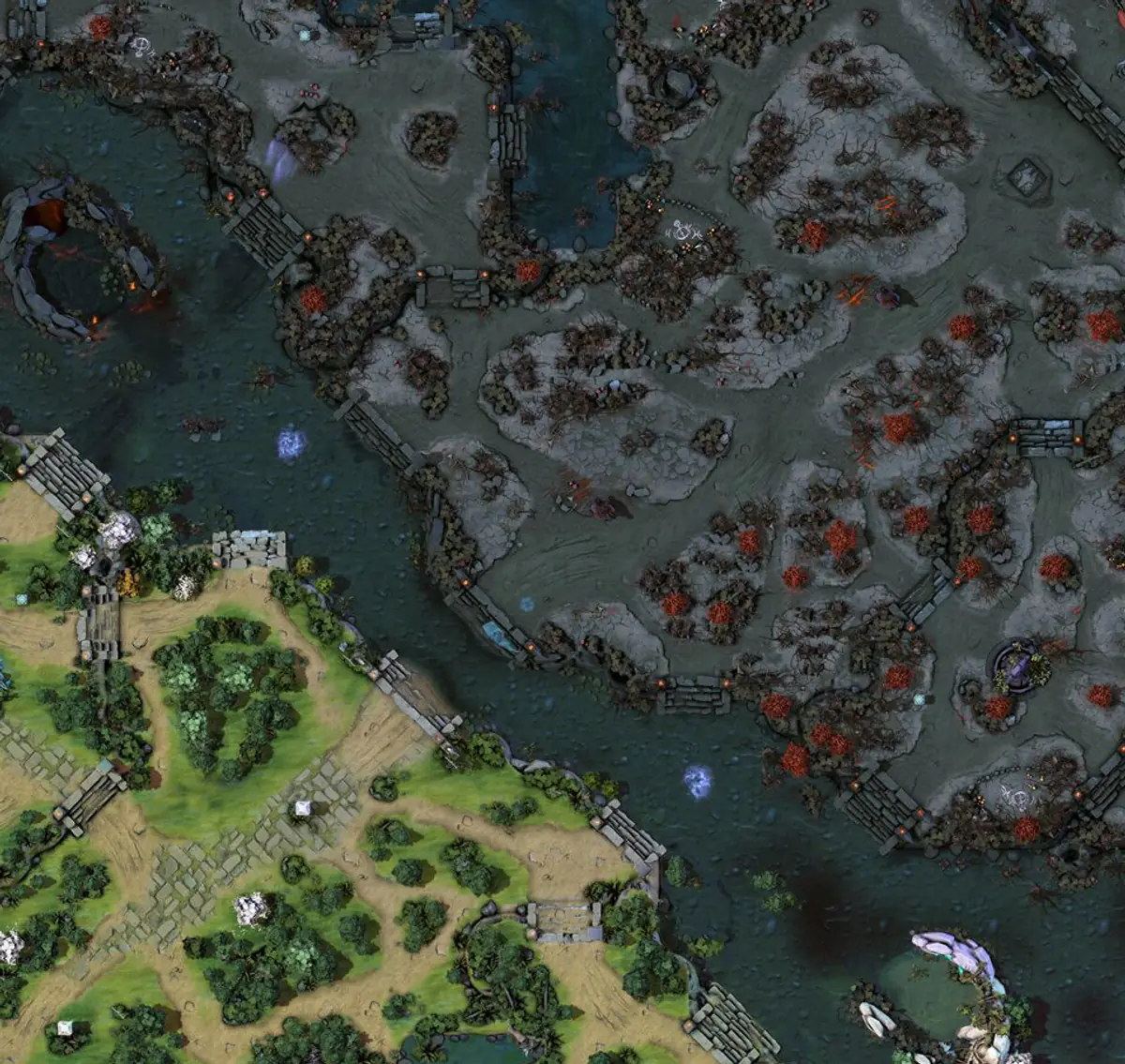
Game modes lists the modes a lobby can run. Three are useful for practice. Solo mid for a matchup, an ordinary lobby for a five-person plan, and a lobby with a  Bottle start on a
 Shadow Fiend when what you are practicing is rune timing.
A lobby is also the right place to practice the support habits nobody drills. Neutral camps, stacking and pulling covers Stack and Pull timings, and both are worth ten minutes with nobody watching. Ward placement is the same: buy an  Observer Ward, walk the route, and see what each spot actually covers.
Replays
Replays are the only tool that shows you a decision rather than an action, and they are the one most players abandon because they try to watch whole matches.

Watch one loss a week and stop at three moments: the point where the lane was decided, the fight that changed the score, and the decision that ended the match. Two minutes around each is enough. At each one ask what you knew and what was on the screen that you did not look at.
A  Crystal Maiden replay is a good first one for a support, because the deaths are obvious and the causes are usually visible thirty seconds earlier. Teleport and buyback is the mechanic that shows up most often in these reviews, in the form of a scroll that was not carried.
Then change exactly one thing for the next ten matches, which the Ancient to Divine guide argues is the only rate at which changes can be attributed.
Unranked, Turbo and Ability Draft
The other three practice tools are real matches with the stakes removed. Unranked is the honest test of whether something has been learned, because the opponents are people. Turbo compresses a match into half the time and is excellent for builds and fights and poor for lanes.

Ability Draft is the fastest way to learn what other heroes' abilities actually do, which is knowledge that transfers straight into drafting and itemization. The random hero tool can widen a pool deliberately for the same purpose, filtered by position and complexity.
The stat calculator belongs in this list too, for the questions a match cannot answer quickly: what a level does to your health, where an attribute item stops being worth its slot. The laning guide covers what to do with the answers.
Measuring, so that practice counts
Practice without a number attached is indistinguishable from playing, and the number does not have to be sophisticated. It has to exist and it has to be written down.

For a core the obvious measures are last hits at the ten-minute mark, deaths with no enemy hero visible, and the minute your first real item landed. For a support they are wards placed, stacks cleared by your cores, and the number of fights you survived after losing them. All six can be counted from the end-of-match screen or a two-minute replay skim.
Take the number for ten matches before and ten after a change. A single match tells you nothing at all, because the variance between matches is larger than any improvement one change produces. Ten is enough to see a direction.
The point of the number is not the number. It is that it stops you concluding you have improved because the last match went well. That is how almost everybody assesses themselves, and it is why so many players practice for years without moving.
A plan that fits an evening
Ten minutes of drill, three matches, one review a week. That is the whole plan and it outperforms every longer one, because it is the version people actually keep doing.

Before the session, run the drill for your role: last hits for a core, the ward route for a support. During the session, hold one thing in mind and ignore everything else. After a loss that stings, stop rather than queue again, which the communication and tilt guide explains at length. Tilt undoes practice faster than practice builds anything.
One setup task is worth doing once and never again. Fix your keybinds and camera options properly, as the settings guide describes, because every hour of practice after that runs on the corrected version.
Practice this
- Run the ten-minute last-hitting drill before your first match, for two weeks.
- Take any new hero into demo mode for half an hour before any match on it.
- Play a new build in one bot match and one unranked match before a ranked queue.
- Review one loss a week at three moments only, and write down one change.
- Practice the ward route or the stack timings in a lobby once, with a stopwatch.
- Stop the session after a loss that makes you want to queue immediately.
Next reads
- How to last hit and deny — the drill in full, with the mechanics behind it.
- The hardest heroes in Dota 2 — the heroes that need this guide most.
- Climbing from Ancient to Divine — where review becomes the main source of improvement.
- Communication, pings and tilt — protecting the practice you have already done.
- Turbo mode — the fast mode, and what it is and is not good for.
Heroes this affects



Items this affects
Common questions
How long should a practice session be?
Ten to twenty minutes before you queue, on one specific thing. Long practice sessions become ordinary play with no opponent, which teaches very little. Short and specific beats long and vague every time.
Is demo mode enough to learn a hero?
It is enough to learn the hands and never enough to learn the judgement. Demo mode has no opponent, no pressure and no consequences, so it fixes the mechanical half and leaves the decisions to real matches.
Should I watch professional matches?
After your own replays, not instead of them. A professional game shows a solved problem played by five coordinated people; your replay shows the mistake you actually make, with your own hands on the mouse.
Are bot matches worth playing?
For a new hero or a new build, yes. Bots move, fight and push, which is more than demo mode gives you, and they punish nothing you do not want punished yet. They are a poor test of whether you have learned anything.
How do I review a replay without watching the whole thing?
Jump to the three moments where the match changed and watch two minutes around each. Ask what you knew at that moment and what you could have known. Whole-match reviews are why most players stop reviewing.
What should I practice first?
Last hitting, if you play a core, and ward placement if you support. Both are mechanical, both are measurable, and both are the single largest gap at the first few medals.
Patch 7.41Checked on Sep 23, 2026