Last hitting and denying
How last hits and denies work in Dota 2 7.41: who gets the gold, what a deny takes away, the experience rules, tower denies, and how to practice the timing.
· Patch 7.41
This page was checked against patch 7.41 and the current patch is 7.41f. The explanation still holds, but any number on it may have moved.


A last hit is the killing blow on a creep, and it decides who is paid: the gold bounty goes only to the unit that lands it. A deny is the killing blow on one of your own creeps, allowed once it is low, and it decides what the enemy does not get. Everything about the laning phase runs through these two clicks, which is why every core practices them before anything else. This page explains the gold and experience rules behind each, tower denies, and the timing itself.
- Only the last hitter receives a creep's gold; experience is shared with everyone nearby, but a deny cuts the enemy's share.
- You can deny your own creeps below half health, your own towers when they are low, and allies under certain effects.
- The timing depends on your attack point and projectile, so it is a hero-specific skill, not a general one.
- A support should deny and harass rather than last hit, because the carry's gold matters more than its own.
- Practice against creeps in a lobby before practicing against a lane opponent.
Who gets paid
Every lane creep, neutral creep and building has a gold bounty, and only the last hitter gets it. That single rule is why the carry stands beside the creeps and the support does not: two heroes in a lane cannot both be paid for the same wave, and the team has decided that the carry's gold is worth more. Gold and bounties lists every source of gold; this page is about the one that dominates the first fifteen minutes.
Experience is shared, not won. Every enemy hero within the sharing radius of a dying creep receives a share of its experience whether they touched it or not. That is why the offlaner can lose every last hit and still reach level six on schedule, and why the safe-lane pair works so hard to keep the offlaner out of range of the dying creeps. Experience and levels has the sharing rules and the level table.
What a deny takes away
Your own creeps become deniable once they are below half of their health. When you kill one, the enemy last hitter gets no gold, and the enemy heroes in range receive only a reduced share of the experience they would otherwise have taken. You receive nothing for the deny itself. Its value is the enemy's loss, plus a second effect: a denied creep is one fewer creep in your wave, so the equilibrium drifts toward your tower. Denying is the main tool for freezing a lane, and Creeps and creep equilibrium explains the drift.
Some heroes deny more than others.  Lifestealer's Feast lets him deny his creeps well above the usual threshold, and the deny threshold for a support with high base damage such as
 Crystal Maiden is reachable with a single attack. A ranged hero like
 Sniper can deny from a distance the melee opponent cannot contest.
timings.json once Q4 confirms them in the client.Tower denies and other targets
Towers can be denied once they are low enough, by attacking your own tower. A denied tower pays the enemy team a reduced bounty and nobody receives the last-hit bonus. It is worth doing when a tower is going to fall anyway and worth planning for: a support who stands under a dying tier 1 tower and denies it takes hundreds of gold from the enemy team. Buildings has the bounty structure for each building.
Two other denies come up. Allied heroes can be denied while under specific damage-over-time effects, which shortens the enemy's kill and pays them less; the effects are listed on the ability cards that allow it. Neutral creeps cannot be denied at all, so a contested jungle camp is a pure last-hit race. Denying a Flagbearer creep is worth more than denying an ordinary melee creep, because its bonus bounty is lost with it.

The timing itself
A last hit is landed by starting an attack so that it connects just after the creep drops into range of your damage. Two hero numbers decide the timing. The attack point is the delay between the attack order and the hit, and it differs greatly between heroes; the projectile speed adds a second delay for ranged heroes. Both are on the hero page and explained on Attack speed and base attack time.  Tiny hits hard but slowly;
 Anti-Mage hits fast and light; a ranged hero like
 Shadow Fiend has to lead the creep's health bar by the flight time of the projectile.
Damage decides the window. A hero with high starting damage has a wide window because it can kill a creep from further above the last-hit threshold, and cheap damage is the first thing to buy: an  Iron Branch or two,
 Blades of Attack on a hero that scales with it, and
 Quelling Blade on any melee core because it adds creep-only damage. The hero stats calculator shows a hero's level-one damage so you can compare windows before picking.
Spells count. Shadow Fiend's Shadowraze and  Dawnbreaker's Starbreaker secure last hits the enemy was about to deny, and a mid laner's
 Bottle exists partly to pay for that mana. A
 Tango keeps you in lane long enough to keep practicing.
Practicing it
Last hitting is learned in a lobby against creeps with no enemy hero, then against a bot, then in a real lane. The last-hitting guide is a drill plan and the practice guide puts it into a schedule. The laning phase guide covers the second layer, which is winning the last hit against a hero who is harassing you, and the carry guide covers the third, which is deciding when a last hit is not worth taking.
How it interacts with other mechanics
- Pulling. A pulled camp gives the support neutral last hits without touching the carry's wave; see Neutral camps, stacking and pulling.
- Positions. The convention that the carry takes the last hits is the whole reason positions exist; see Lanes and positions.
- Equilibrium. Every last hit pushes the lane a little and every deny pulls it back; see Creeps and creep equilibrium.
- Buildings. Tower denies and building bounties are on Buildings.
Common mistakes
- Attacking creeps between last hits. It pushes the wave and shows the enemy your attack timing.
- Denying while the carry needs the creep. The deny is worth less than the carry's last hit.
- Standing still to last hit. Move between attacks so the enemy ranged hero has to aim.
- Ignoring the tower deny. A dying tower is still worth hundreds of gold to whoever lands the last hit.
- Buying attack speed for last hits. Damage widens the window; attack speed does not.
Heroes this matters for

Anti-Mage — a carry whose game is last hits
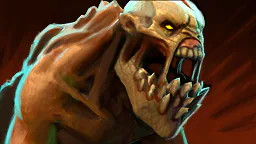
Lifestealer — Feast lets him deny creeps early

Sniper — range makes last hitting easy

Shadow Fiend — Shadowraze secures last hits

Tiny — high damage but slow attacks

Crystal Maiden — a support who should deny, not steal

Dawnbreaker — Luminosity rewards last-hitting
Items this matters for
Quelling Blade — damage to creeps for last hits and denies
Iron Branch — cheap damage early
Blades of Attack — raw damage for last hits
Tango — lets you stay in lane to keep last hitting
Bottle — sustain for the mid last-hit duel
Heroes this affects
Items this affects
Common questions
Do you get gold for a deny?
No. A deny gives you nothing directly. Its value is what it takes from the enemy: the creep's whole gold bounty and a large share of its experience.
When can I deny a creep?
Once it is below half of its health. Your own creeps show the deny option only from that point, and heroes with a deny passive such as Lifestealer's Feast can start higher.
Can towers be denied?
Yes, once the tower is low enough. A denied tower gives the enemy team a reduced bounty instead of the full one, and nobody gets the last-hit bonus.
Does a support steal a last hit from the carry?
Yes, if the support lands the killing blow the gold goes to the support. The support should deny, harass and pull, and only take last hits the carry cannot reach.
Patch 7.41Checked on Sep 15, 2026