The Hardest Heroes in Dota 2
The thirteen heroes the game itself rates most complex, grouped by the kind of difficulty they present, and a practice plan for learning one properly.
· Patch 7.41
This page was checked against patch 7.41 and the current patch is 7.41f. The explanation still holds, but any number on it may have moved.
Thirteen of the game's heroes carry a complexity rating of three, the highest the client publishes, and they are hard in four distinct ways: units to control, spells to hold in your head, timings measured in fractions of a second, and dependence on another player. Knowing which kind of difficulty you are signing up for is most of choosing one. This guide groups the thirteen by that, and ends with a practice plan that works for any of them. Hero complexity and roles explains what the rating measures.
- The list is the game's own rating, not an opinion about strength.
- Complexity buys options, never power; simple heroes win at every rank.
- The four kinds of hard are units, spells, timing and dependence.
- A demanding hero played at part strength is worse than a simple one played fully.
- Learn one in a practice setting until it is dull, then take it to a queue.
What the rating means
Every hero in the client carries one, two or three filled diamonds. Three means the hero asks you to manage more than the usual four abilities and one body: extra units, an unusually long spell list, an ability whose effect depends on exact timing, or a kit that only functions alongside another hero.
| Complexity | Heroes | Examples |
|---|---|---|
| Simple | 55 | Abaddon, Alchemist, Anti-Mage, Axe |
| Moderate | 59 | Ancient Apparition, Bane, Batrider, Beastmaster |
| Complex | 13 | Arc Warden, Brewmaster, Chen, Earth Spirit |
Valve's own complexity rating across the roster.
It is not a difficulty score for winning. Several complexity-one heroes are among the strongest picks at every rank, and several of these thirteen sit below average in win rate precisely because so many of the people picking them are still learning. The tier list guide explains that selection effect properly; this guide does not repeat the argument.
Units to control
Six of the thirteen give you something else to move. Illusions and summons covers how a Summon and an Illusion each behave, and controlling them is a separate skill from playing the hero.
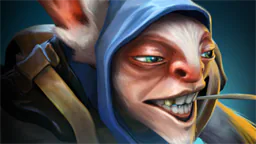
 Meepo is the extreme case. Divided We Stand gives you several copies that share experience and items, and Poof moves them around the map. Every copy is a separate hero to position, and one of them dying kills all of them.
 Lone Druid is the gentlest entry. The Spirit Link bear farms, fights and carries its own items, and it mostly stays where you put it. The difficulty is economic rather than mechanical: you are funding two inventories out of one income, and deciding which one gets the next item is most of the hero.
 Visage is similar: Summon Familiars gives you two birds that do enormous damage and die instantly if you forget them.
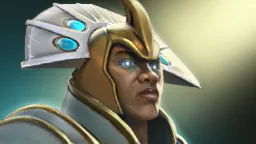
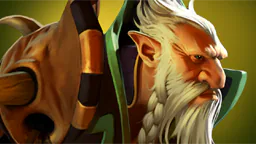
 Chen converts neutral creeps into an army with Holy Persuasion, and every one of them has its own abilities and its own position. He is also the only hero here whose strength depends on knowing the neutral camps well enough to find one specific creep. That is a piece of map knowledge nothing else in the game requires of you.
 Brewmaster spends most of a match as a single hero and then becomes three at once with Primal Split.
 Arc Warden creates a second copy of himself with Tempest Double, complete with its own items, which makes a
 Hand of Midas and
 Boots of Travel part of the plan rather than a luxury.
Spells to hold
Three heroes ask you to remember more than four buttons, and two of them change what the buttons do during the match. Innate abilities explains the ability every hero now has from level one.
 Invoker combines Quas, Wex and Exort into ten different spells, held two at a time. The mechanical load is real, and the harder part is choosing which two to have ready before a fight rather than during it. Sun Strike alone is a skill that takes weeks.
 Rubick has four abilities of his own and then borrows the enemy's with Spell Steal. That means knowing what every hero in the game does well enough to use it correctly within seconds of seeing it cast. It also means choosing which spell to take, in a fight, from whatever has just been used, which is a decision nobody else in the game has to make.
 Kez switches between two weapon stances, each with its own set of abilities, so the same four keys mean different things depending on what you pressed last. The cost of a mistake is not only the wrong spell; it is a stance you now have to switch back out of while a fight is happening. Aghanim's Scepter and Aghanim's Shard adds another layer to several of these, and an
 Aghanim's Scepter or an
 Aghanim's Shard changes a rotation rather than simply improving it.
Timing measured in fractions
Three heroes have abilities whose value depends on being cast at a specific instant. Cast point and Animation cancel stop being trivia here and become the hero.
The three of them also share a property worth knowing before you commit: none is forgiving of a slow connection or an unfamiliar keyboard, because the window for the correct action is genuinely short.
 Earth Spirit places stones with his innate and then uses Boulder Smash, Rolling Boulder and Geomagnetic Grip against them. Each combination reaches a different distance and applies a different effect, and none of them works without a stone in the right place first.
 Morphling moves points between strength and agility while a fight is happening with Attribute Shift (Agility Gain), so he is durable one second and lethal the next. Getting that wrong in either direction is a death, and the Timing is measured in the length of a single stun. Attributes: Strength, Agility, Intelligence, Universal explains what those points actually do.
 Oracle has two abilities that either save an ally or kill them depending on the exact moment of the cast. False Promise delays all damage and healing, and Fate's Edict makes a target immune to magic and unable to attack. Both are a Save and both are a mistake if mistimed.
Dependent on somebody else
One hero on the list is difficult for a reason that has nothing to do with your hands.

 Io attaches to an ally with Tether and moves both of them across the map with Relocate. Every one of those actions needs the other player to understand what is about to happen. That makes Io the one hero here which is genuinely harder in a public queue than in a coordinated team.
The lesson generalises. A Support whose value depends on a specific Carry is a harder pick in a random match than its complexity rating suggests, and the reverse is true of heroes that need nothing from anybody.
Choose one for the position you already play
The most common mistake with this list is picking the hero that looks most impressive rather than the one that fits the job you already understand. Learning a new position and a complex hero at the same time is two projects, and neither finishes.
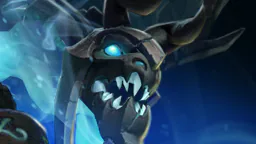
If you play the safe lane, Lone Druid, Morphling and Arc Warden are all position-one heroes, and the first of them asks least. If you play mid, Invoker and Kez both live there, and Morphling does too in many drafts. If you play the offlane, Brewmaster is the natural entry. If you support, Visage, Earth Spirit, Rubick, Oracle, Chen and Io are all yours, with Visage and Earth Spirit at opposite ends of the same scale.
Meepo is the exception to every version of that advice. He is a core, he is a project, and he does not resemble any other hero in the game. That is precisely why the people who learn him tend to keep playing him for years.
The common failure: half a hero
There is a specific way these thirteen lose matches, and it is worth naming because it is avoidable. The player has learned the hero's actions but not its habits, so the hero appears in the match at roughly half of what it does.
It looks like this. The Meepo who controls four copies but only ever attacks with one. The Invoker who has the right two spells ready and casts them in the wrong order. The Chen whose creeps follow him around without ever being used. The Io who tethers correctly and never relocates. In each case the hero is present, the team assumed it would do its job, and it did part of one.
The fix is not more matches; it is narrower practice. Pick the single action the hero is failing at and rehearse only that, in demo mode, until it stops requiring attention. Half an hour of that is worth ten matches of hoping it improves on its own.
How to learn one properly
The plan is the same for all thirteen and it is boring on purpose. The practice guide has the tools; this is the order to use them in.

Start in demo mode with no opponent and learn the hands: the combination, the order, the units. Give it a full half hour rather than a few minutes, and do the same sequence until it is boring, because boredom is what automatic feels like from the inside. Then a bot match, where the only new variable is that something moves. Then unranked matches, where the new variable is people. Only then a ranked queue, and pick the hero first rather than as a surprise, so your team can draft around it.
Two rules make this faster. Learn one hero at a time, because the mechanics do not transfer between them. And set a target that is not a result: the aim of the first twenty matches is to stop thinking about the buttons, not to win.
It is also worth telling your team, once, in the first minute. A team that knows the Invoker is a new pick will draft and lane differently, and will be considerably less annoyed at minute twenty than one that assumed otherwise. That single sentence costs nothing and removes most of the friction these heroes generate.
What to expect afterwards
A demanding hero learned properly gives you two things. The first is a Comfort pick that very few people in your bracket can play, and often a Flex pick as well, since several of these thirteen credibly fill more than one position. That matters most at the top of the ladder, where the Immortal guide describes a small and well-prepared population.
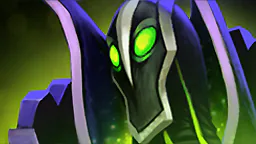
The second is a better understanding of the whole game. Learning Rubick teaches you what every hero's abilities do. Learning Morphling teaches you attributes. Learning Chen teaches you the neutral camps better than any farming guide. That transfer is real and it is the strongest argument for picking one up at all.
None of that is a small return for a month of practice, and it is available on any of the thirteen rather than only on the fashionable ones. What it does not give you is a rating. Debuff Immunity and dispels and Teleport and buyback still decide your matches, a  Black King Bar is still bought for the same reasons, and an
 Observer Ward still has to be placed by somebody. The hero comparison tool and the random hero tool both filter by complexity if you want to see the scale for yourself.
Practice this
- Pick one hero from this list and use it in demo mode for thirty minutes before any match.
- Play ten bot matches on it before a single unranked one.
- Set a non-result target for the first twenty matches: stop thinking about the buttons.
- Learn a
 Blink Dagger timing on it if the hero uses one, before adding anything else.
- Play it as a first pick in ranked rather than a last-second surprise.
- Return to a simple hero for a match after each session and note what transferred.
Next reads

- How to practice Dota 2 — demo mode, bots and replays in the right order.
- How we rate heroes — why these heroes' win rates say what they say.
- Choosing your first hero — the other end of the complexity scale.
- Best carries for beginners — where to start if this list looks like a lot.
- Best supports for beginners — where Io and Oracle sit once you are ready.
- Positions 1 to 5 explained — which of these thirteen plays where.
Heroes this affects
Items this affects
Common questions
Where does the complexity rating come from?
From the game itself. Every hero carries a rating of one, two or three, shown as filled diamonds on the hero page, and this list is simply the thirteen that carry a three. It is Valve's judgement rather than ours.
Are these heroes stronger than easy ones?
No. Complexity measures how many things a hero asks you to manage, not how much it wins. Several of the simplest heroes in the game win more matches at most ranks, and several of these thirteen lose more on average than they should.
How long does it take to learn one?
Tens of matches for the mechanics and hundreds for the judgement. A reasonable plan is a week in demo mode and bot matches, then unranked games, and only then a ranked queue with the hero as your first pick rather than a surprise.
Which is the most approachable of the thirteen?
Probably Lone Druid or Visage, because the extra units do roughly what you tell them and do not need to be repositioned every second. Meepo and Chen are the far end of the same scale.
Should a beginner ever pick one?
In an unranked match or a lobby, yes, as often as you like. In a ranked match, not until the hero is boring in a practice setting, because a complex hero played badly costs four other people their match as well.
Do any of them get easier with items?
Some. A blink or a travel item removes one decision from several of them, and an Aghanim's upgrade occasionally simplifies a rotation. None of them stops being demanding, because the difficulty is in the decisions rather than in the stats.
Patch 7.41Checked on Sep 23, 2026