Drafting and Counter-Picking in Dota 2
How to draft in All Pick: pick order, what a counter really is, reading lane matchups, synergy, flex picks, the last pick, and how to use the counter picker.
· Patch 7.41
This page was checked against patch 7.41 and the current patch is 7.41f. The explanation still holds, but any number on it may have moved.
Drafting is choosing five heroes that can win together against the five the enemy chose, and counter-picking is the smaller skill of choosing one hero because of one enemy. Most players over-value the second and ignore the first. This guide covers the order picks happen in, what a counter actually is, and how to read lane matchups. It then covers using the counter picker without letting it think for you, and the drafting mistakes that lose matches before the horn. Hero complexity and roles covers what a hero is; the team composition guide covers what five of them should add up to.
- Draft for lanes first, fights second, counters third.
- A Counter pick you cannot play is worse than a Comfort pick you can.
- The last pick is the most valuable one on the team. Do not waste it on a hero you would have picked anyway.
- Hide your own lanes with Flex pick heroes; read the enemy's from theirs.
- Sample size decides whether a matchup number means anything.
What a draft is for
A Draft is trying to produce three things: five lanes that work, a plan for winning fights, and a Win condition the team can name. Everything else is decoration. A draft with a wonderful counter and no hard support has already lost the laning phase, and a draft with five heroes who all peak at minute forty has lost the first thirty.
In All Pick, both teams see every pick as it happens, and the order is loosely alternating rather than strictly structured. That means the information advantage moves back and forth, and the player picking last on each side holds it. Game modes describes the modes, and the Captains Mode guide covers Captains Mode, the structured version with bans and phases.
The first question in any draft is roles, not heroes. Five players who each want to farm produce a match where nobody farms. Lanes and positions and the positions guide set out the five jobs, and the fastest way to improve your drafting in a Pub is to claim a role early and pick a hero for it late.
Pick order
Early picks give information away and late picks use it, so what you pick early should be something you would want in any match. Heroes that are strong regardless of the opponent, that flex between positions, or that your team needs someone to commit to.
| Roles | Heroes | Share of roster |
|---|---|---|
| Disabler | 95 | 74.8% |
| Nuker | 89 | 70.1% |
| Carry | 72 | 56.7% |
| Initiator | 55 | 43.3% |
| Escape | 53 | 41.7% |
| Durable | 50 | 39.4% |
| Support | 48 | 37.8% |
| Pusher | 29 | 22.8% |
How many heroes carry each role, out of the full roster.
The First pick in a lane-based game should usually be a support or a flexible core. A  Lion or a
 Disruptor is useful in almost any draft, so picking one first costs you nothing in information. Picking a
 Anti-Mage first tells the enemy exactly what your team intends to do and gives them the whole rest of the draft to prepare.
The Last pick is the seat with the most information, and it should be spent on the problem your draft has: the missing damage type, the answer to the enemy's carry, or the hero that wins the lane you are worried about. A last pick spent on the hero you were always going to play has thrown away the only structural advantage the draft gave you.
What a counter actually is
"Counter" gets used for three different things, and separating them is most of the skill. A lane counter beats the enemy hero in the first ten minutes: more range, a better trade, an ability that punishes theirs. A fight counter beats the enemy hero at minute thirty, regardless of lanes. And an item counter is not a pick at all.
An  Axe against a melee safe lane is a lane counter. A
 Doom against a hero whose ultimate decides fights is a fight counter.
 Diffusal Blade against a mana-dependent hero,
 Spirit Vessel against heavy healing,
 Dust of Appearance and
 Sentry Ward against invisibility: those are item answers, and picking a whole hero for a problem an item solves is the most common drafting error there is.
Damage types: physical, magical and pure, Armor and physical damage and Magic resistance explain the mechanical half of most counters. Debuff Immunity and dispels explains why some counters stop working the moment a  Black King Bar exists, which the BKB reference in the itemization guide covers. Illusions and summons explains why area damage counters a
 Phantom Lancer in a way single-target damage never will.
Using the counter picker
The counter picker takes the enemy heroes you name and ranks candidates by their summed historical Advantage (matchup) against that group. It reads the same matchup tables the hero pages carry, and it prints the sample size beside every row. Used properly it is a fast way to narrow a field; used badly it is a way to pick a hero you cannot play.
Three rules make it useful. First, add enemies as they are picked rather than waiting for the full draft; three names already separate the field. Second, read the per-enemy breakdown rather than the total, because one large edge and four blanks is a different recommendation from five small consistent edges. Third, treat a small edge as a tie-breaker between heroes you were happy to play, not as a reason to pick something new.
What it cannot see is your own team. It reads hero-against-hero tables and adds them up, so it knows nothing about whether your four team-mates can make the counter work. A  Riki may lead every table against a draft and still be useless because the enemy always buys a
 Gem of True Sight; Invisibility, True Sight and detection explains that whole family of false readings.
The hero comparison tool answers the other half. Two heroes side by side at a chosen level shows the attack range, the base stats and the role weights that decide a lane. The tier list guide explains why sample sizes and brackets matter before you trust any of these numbers.
Lane matchups
Most of a draft's value is in the lanes, because the laning phase is where the largest swings happen and the one phase every match has. The laning guide covers how a lane is played; this is how to choose one.
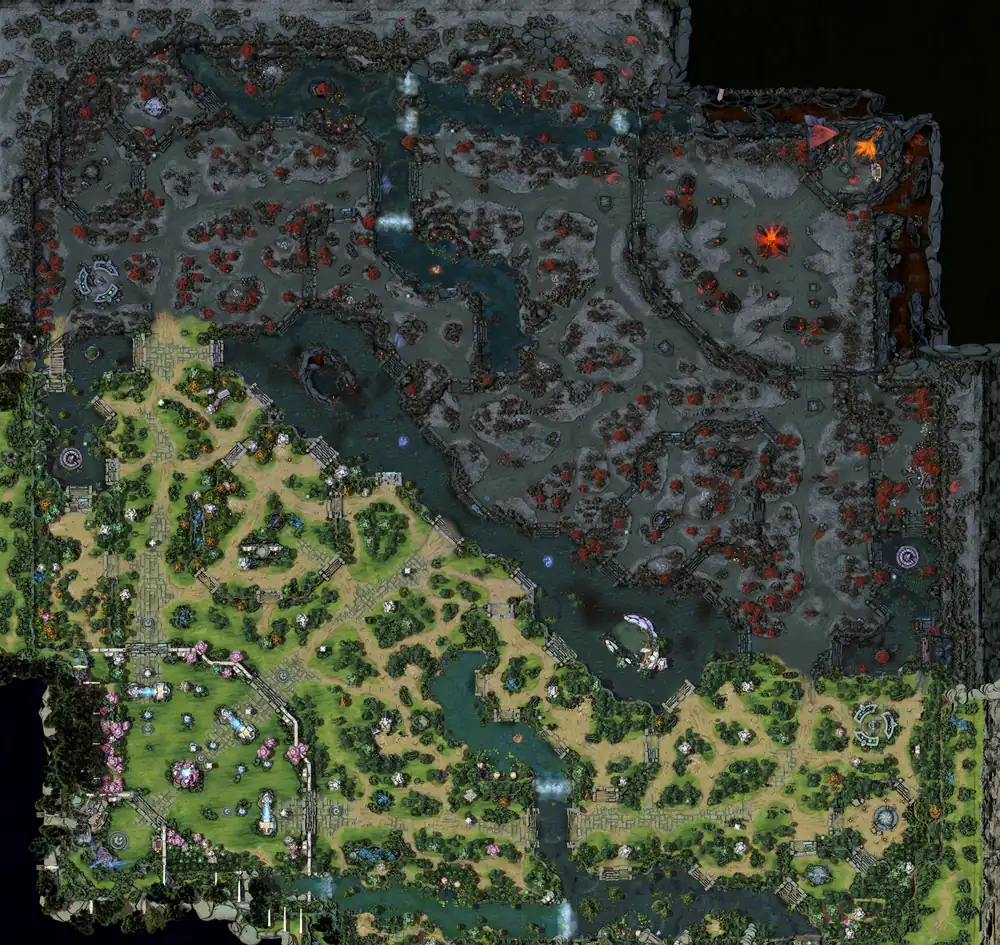
- 1.Top lane
- 2.Mid lane
- 3.Bottom lane
- 4.Radiant base
- 5.Dire base
Three questions decide a lane on paper. Who has more attack range, who can kill from half health, and who can stay in the lane longer on regen and mana. A ranged hero against a melee hero wins the first; a hero with a stun and a nuke wins the second; a hero with good mana and sustain wins the third. Winning two of the three is a winning lane.
The second half is the support pairing. A melee carry with a support that zones well is a different lane from the same carry alone. An offlane pair with two disables kills a safe lane at level 3; the same pair with none of them survives and nothing more. The offlane guide covers the position most affected by the draft.
Range is the single most predictive of the three, which is why so many lane counters are simply a ranged hero against a melee one. The exceptions are heroes whose ability punishes an attacker at close range, and they are worth knowing precisely because they break the rule.
Lane assignment is also a counter in itself. A  Bloodseeker who is losing the safe lane on paper can be sent mid instead, and a
 Sven who cannot lane against the enemy offlane pair can swap sides with the mid. Deciding this before the horn costs nothing; discovering it at minute four costs the lane.
Drafting your own lane
The draft decides the lane you actually play, and it is worth thinking about your own two or three heroes in that specific way rather than in general.
Start with the lane you are most often unhappy in. For a safe-lane carry that is usually a melee hero against a ranged offlane pair; for a mid player it is a matchup with more range and a nuke; for an offlaner it is a lane with two disables in it. Pick one hero for your pool that turns each of those lanes from miserable into playable, and you have removed most of the bad games a draft can hand you.
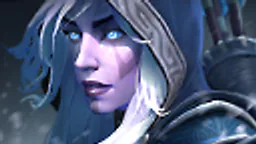
A  Drow Ranger shows both sides of this. With a support that can zone she is one of the strongest laners in the game, because nothing steps forward against her range. Alone against a melee offlaner with a gap-closer she is one of the weakest, because her own escape does not exist. That is not a matchup table talking, it is an assignment problem, and the answer is which support is standing beside her rather than which hero is on the other side.
The same reasoning decides whether to swap lanes. If the draft has produced a losing safe lane and a winning offlane, swapping the two cores before the horn costs nothing and fixes both. Teams rarely do it because nobody says it, and the window for saying it is about ten seconds wide.
Synergy
Synergy is two heroes who are worth more together than apart, and it is usually more reliable than a counter because it does not depend on the enemy. The clearest versions are a setup and a payoff: a  Magnus pull into an
 Enigma ultimate, a Disruptor holding a target still for anything, a hero that makes another hero's hardest requirement easy.
The second kind is coverage: two heroes that need different things from the same match. A Late-game team made of five heroes that all peak late has no answer to the first twenty minutes. A team of five early heroes has no answer to a match it fails to end. A draft with one of each is stronger than a draft with two very good versions of the same idea.
The third kind is Space. A  Ursa or a
 Legion Commander creates fights that pull the enemy off the map, which lets a farming core use the jungle. That relationship is invisible in every matchup table and decides a great many matches. Attributes: Strength, Agility, Intelligence, Universal is worth a glance here too, since a draft with no strength heroes in front tends to lose the fights it starts.
Flex picks, comfort picks and bans
A Flex pick is a hero that can play more than one position convincingly, and its value is that the enemy cannot read your lanes. An  Invoker could be mid or a support; a Doom could be offlane or a farming core. Picking one early gives away far less than picking a hero that can only be one thing.
A Comfort pick is a hero you play well. Its value is real and constantly underrated: a hero you know is worth more than a small historical edge on a hero you do not, because the edge is an average across players who do know it. The first hero guide covers building that pool, and the random hero tool is a way to widen it deliberately in unranked matches.
Ban phases exist in All Pick too, and the rule for them is simple: ban the hero that ruins your match rather than the strongest hero in the Meta. Those are different heroes, and only one of them is yours. The Captains Mode guide covers bans as a structured phase.
Reading the enemy draft
By the time the draft ends you should be able to answer four questions about the enemy without looking anything up. Which hero is their Win condition. Which lane is their strongest. Which damage type they mostly deal. And which of their abilities ends fights.
Those four answers decide your items, your lane assignments and your fights. A draft that deals almost all magical damage means a  Orchid Malevolence is less useful than magic resistance, and a draft with one enormous single-target ability means a
 Linken's Sphere on the right hero.
 Heaven's Halberd,
 Scythe of Vyse,
 Monkey King Bar,
 Silver Edge and
 Blade Mail are all answers to specific reads, and the tempo guide covers when each answer needs to exist.
The same reading applies to your own side. If your team has no hero that can start a fight, somebody is buying an initiation item; if your team has no detection, somebody is buying it. Saying these out loud in the first minute is worth more than any counter pick, and the team fight guide explains why.
Common drafting mistakes
Five errors account for most bad drafts. Picking a Position that is already taken and arguing about it into the horn. Picking a counter you have never played. Picking five late heroes because each one individually looks strong. Ignoring the fact that nobody has bought wards. And picking from a Tier list without reading what the list is measuring.
The list mistake is the most invisible. A hero with a high win rate across all brackets may have that rate because of the players who pick it rather than because of the hero. The tier list guide goes through why this site publishes methodology rather than rankings. A  Slark or an Invoker looks very different at different levels of play for exactly this reason.
The fix for all five is the same sentence, said before you lock in: what does this hero do for this team in this match. If the answer is "it is strong", that is not an answer.
There is a sixth mistake that only shows up later, and it is worth naming. A draft is a set of promises about who does which job, and the promises have to be kept after the horn. A team that drafted a hard support and then watched that player farm the safe-lane jungle has the same problem as a team that never drafted one. Say the lanes out loud once the picks are locked, in one line each, and the draft you made is the draft you play.
Practice this
- Claim your role in the first ten seconds of the draft for a week and note how many arguments disappear.
- Before every lock-in, say out loud what the hero does for the team in this match.
- Use the counter picker with three enemy names and read the per-enemy breakdown rather than the total.
- Save your last pick for the problem your draft has, in five matches running.
- After each loss, write which of the four enemy-draft questions you had wrong.
- Play three matches with a flex pick and note whether the enemy lanes guessed wrong.
Next reads
- Building a team composition — what the five picks have to add up to.
- Captains Mode drafting — bans, phases and first-pick philosophy.
- How we rate heroes — how to read a win rate before you draft from one.
- The laning phase — where most of a draft's value is actually realized.
- Itemization basics — the answers you buy instead of picking.
Heroes this affects

Items this affects
Common questions
Is counter-picking worth it in ranked?
Yes, but less than most players think. A counter you cannot play is worse than a comfort hero you can. Use counters to choose between heroes you already know, and to avoid the one matchup that makes your game miserable.
Should I pick first or wait?
Wait if your role allows it. Picking last gives you information and costs you nothing except the risk of your role being taken. If your team is arguing about roles, claim yours early and worry about the matchup afterwards.
What is a flex pick?
A hero that can credibly play more than one position, so the enemy cannot tell where it will be from the draft alone. It hides your lanes, which is worth more than a small matchup edge.
How do I counter a hero I keep losing to?
Separate two things: whether the hero beats yours in lane, and whether it beats your team in fights. The first is fixed by a different lane assignment, the second by a pick or an item. They are rarely the same problem.
Does the counter picker tell me what to pick?
It tells you what has historically done well against the heroes you name, with the sample size beside it. That is evidence, not instruction. It knows nothing about your own team, your lanes, or which heroes you can actually play.
How much does the enemy draft matter compared with my own play?
Far less than a bad draft feels at the time. Most matches are decided by lanes, farm and fights. A draft that avoids one disastrous matchup has done its job; it is not going to win the match on its own.
Patch 7.41Checked on Sep 23, 2026