Ability Draft Basics
How Ability Draft works in 7.41, what to draft first, how innate abilities behave in the mode, and the item choices that hold a four-hero kit together.
· Patch 7.41
This page was checked against patch 7.41 and the current patch is 7.41f. The explanation still holds, but any number on it may have moved.

Ability Draft gives every player a random hero body and then drafts abilities from a shared pool taken from the heroes in the match. A finished hero is therefore a body from one place and a spell list from four others. The skill is the draft: picking abilities that work together, that your body can actually use, and that leave you able to pay for them. Game modes describes the mode among the others; this guide is how to play it.
- The body you are given decides which abilities are worth drafting.
- Take an ultimate that ends fights, or mobility if your body has none.
- Mana is the constraint in almost every Ability Draft match.
- Innate abilities follow their own rules here, and facets no longer exist.
- Abilities that need a specific hero mechanic usually do nothing on the wrong body.
How the mode works
Each player receives a random hero. The abilities of every hero in the match go into one pool. Players take turns choosing from it in a repeating order that reverses each round, so whoever picks last in one round picks first in the next.
You end the draft with a full set of abilities including an ultimate, and you level them as you would in any match. Talents still belong to the hero body, which is why a generic attribute talent is usually better here than one written for an ability the body no longer has.
The pool is visible to everyone, so the draft is public information. Watch what the enemy takes as closely as you watch what is left, because a match where somebody assembled a full combination is decided long before the first fight.
Read your body first
The most common mistake in the mode is drafting the best ability rather than the best ability for the hero you were given. Attributes: Strength, Agility, Intelligence, Universal explains what the body brings: health, mana, damage and the speed at which it attacks.
Four properties of the body matter. Whether it is melee or ranged, because attack modifiers and orb effects depend on it. Its attack range, which decides whether a short-range ability is usable. Its mana pool, which decides how many expensive spells you can hold. And its movement speed, which decides whether you can reach anything.
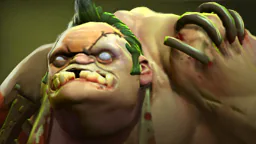
A  Pudge body is the textbook example: slow, tough, melee, and an excellent home for anything that holds enemies in place. A slow melee body with a large health pool wants Lockdown and area damage. A fast ranged body wants a Nuke and an escape. A body with high attack speed can use an attack modifier that a caster body would waste entirely. The hero comparison tool is a quick way to see what a body you do not know actually has. The random hero tool is a reasonable way to practice reading unfamiliar ones before you meet them here.
Draft order: what to take first
Two categories are scarce and everything else is not. The first is an Ultimate that decides a fight on its own. The second is mobility, because most bodies have none and the pool rarely holds many.
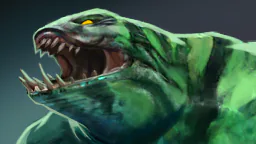
A  Tidehunter ultimate or anything similar is a first pick in any draft it appears in, because it needs no setup and no particular body. So is a Blink-in ability on a body that cannot otherwise reach anybody. After those, take a reliable Disable, then wave clear, then damage.
What to take last is what everybody undervalues: a Save, a slow, or an ability that restores mana. Those are usually still on the board in the final rounds, and a kit with one of them is considerably more coherent than a kit with a fourth damage spell.
 Lion and
 Magnus are both heroes whose abilities are contested for this reason. Their spells combine with almost anything, and a hero whose spells only work with their own kit is a hero nobody drafts from.
Combinations that work
The mode rewards pairs rather than collections. A setup ability followed by an area payoff is the classic shape, and you should aim to end the draft holding one of each.
The pairs to look for are simple. Something that gathers or holds enemies, followed by something that damages an area. Something that makes you unkillable briefly, followed by something that requires you to stand still. Something that restores mana, followed by anything expensive. A Refresher combo is the extreme version and it is worth remembering that the item exists in this mode too.
Illusions and summons is worth reading before you draft anything that creates units, because a summon on a body with no way to protect it is a spell that does very little. Spell amplification and cooldown reduction covers the stats that make a spell-heavy kit work.
What does not transfer
Some abilities are written for one hero and behave badly anywhere else. Anything that scales from a stat your body does not have, anything that modifies an attack your body cannot make, and anything that references a mechanic belonging to its original hero.
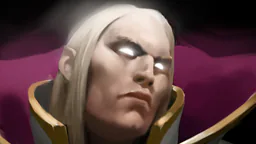
 Invoker is the hero everybody watches for. His individual spells are strong and several of them are among the most valuable picks in the pool, but they arrive one at a time rather than as the hero. Heroes with heavily interlocked kits, such as
 Io and
 Meepo, are restricted in the mode for related reasons.
Innate abilities follows its own rules here, set out in 7.36. An innate that does not appear on the ability bar is assigned automatically to its own hero and cannot be drafted. An innate that can be levelled with a skill point is draftable, but is not assigned automatically. Everything else is disabled. Facets (removed in 7.41) no longer applies at all, since facets left the game in 7.41.
Items for a four-hero kit
The shopping list in this mode is unusual, because your hero is paying costs that no single hero was designed to pay.
Mana comes first.  Arcane Boots or a
 Soul Ring early is normal, and a
 Magic Wand is worth more here than usual because so many spells are being cast near you. After that,
 Octarine Core is unusually strong in a kit built out of large cooldowns.
An  Aghanim's Scepter or an
 Aghanim's Shard can change a drafted ability, so read the tooltip on the spell you actually took rather than assuming. A
 Blink Dagger is the answer to a body that cannot reach a fight, and a
 Black King Bar is bought for the same reason as in any other mode. The itemization guide covers the general method.
Levelling what you drafted
A drafted kit levels differently from a designed one, because nothing about it was balanced as a set. The order matters more than usual and the defaults are wrong.

Start with the ability that keeps you in the lane, which on most drafted heroes is a wave clear or a source of sustain rather than the largest damage spell. Take your ultimate as soon as it is available, since the cooldowns on fight-ending ultimates are long enough that an extra cast across a match is worth more than a level in anything else.
The second rule is to stop levelling a spell you cannot afford to cast. A drafted hero frequently has one expensive ability that would be excellent at maximum level and is unusable in practice until the mana problem is solved. Level the cheap ones, buy the mana, then come back to it.
Attribute levels are worth more here than in a normal match for the same reason. A body carrying four spells it was never designed to hold needs the mana pool more than it needs one more point of damage on any single one.
Playing the match afterwards
Once the draft is over the match is an ordinary one, played by five heroes that do not exist anywhere else. The fundamentals still apply, and the team fight guide is the most useful reading for a mode where fights happen constantly.
Two habits are specific to the mode. Tell your team what you drafted, in one line, because nobody can read your ability bar and a Save they do not know about will not be planned around. And watch the enemy's picks in the draft rather than discovering their combination in the first fight.
The mode is also an excellent way to learn what other heroes' abilities actually do, which is real knowledge that transfers into a Pub immediately. The practice guide covers where it sits among the other tools, and the drafting guide covers the ordinary Draft it has nothing to do with. Any Burst combination you assemble here will teach you something about the heroes it came from.
Practice this
- Read your hero body before the first pick and name its melee or ranged status out loud.
- Take an ultimate or a mobility ability with your first pick in five matches running.
- End one draft with a deliberate setup-and-payoff pair rather than four damage spells.
- Buy a mana solution before your second item in every match for a week.
- Type your drafted abilities in chat in the first minute.
- Note one ability you had never seen used and look up its hero afterwards.
Next reads
- Turbo mode — the other mode worth using for experiments.
- Team fighting — the part of the game this mode gives you most of.
- How to practice Dota 2 — demo mode, bots, replays and where this fits.
- The hardest heroes in Dota 2 — the kits that travel worst into this mode.
- The complete beginner's guide — the fundamentals every mode shares.
Heroes this affects

Items this affects
Common questions
Do talents work in Ability Draft?
Yes, and they belong to the hero body you were given rather than to the abilities you drafted. That means a generic attribute talent is usually more useful than one written for an ability your hero no longer has.
What happened to facets in this mode?
They are gone. Facets were removed from the game in 7.41, so the rules that governed them in Ability Draft no longer apply to anything. Older guides describing facet picks in the mode are out of date.
Which abilities are worth the first pick?
An ultimate that ends a fight, or a mobility ability on a body that has none. Both are scarce and both are taken immediately. Wave clear and damage are almost always still available later in the draft.
How do I deal with mana problems?
Expect them and buy for them. A kit assembled from four heroes usually has costs that no single hero was designed to pay, so Arcane Boots, a Soul Ring or a mana-restoring item early is normal rather than greedy.
Can I draft an ability my hero cannot use?
You can, and it is the most common mistake in the mode. An ability that needs a specific attack type, a summoned unit or a hero mechanic your body does not have will underperform or do nothing at all.
Is the mode good practice for normal matches?
For learning what other heroes' abilities actually do, yes, and that knowledge transfers directly. For laning, itemization and positioning it is a poor teacher, because the drafts produce combinations that ordinary matches never see.
Patch 7.41Checked on Sep 23, 2026