Communication, Pings and Tilt
What to say in a Dota 2 match and when to say nothing: the pings that work, the chat wheel, when to mute, and a routine for the matches that go wrong.
· Patch 7.41
This page was checked against patch 7.41 and the current patch is 7.41f. The explanation still holds, but any number on it may have moved.

Most of what teammates need from you fits in four pings and a handful of three-word phrases, and most of what costs your team the match is typed rather than clicked. Communication in a public match is not about persuading anybody; it is about delivering small pieces of information fast enough to be acted on, and then staying out of the argument that ruins the next twenty minutes. This guide covers what to send, what to skip, and what to do on the evenings when it goes wrong.
- Pings carry almost everything. Sentences carry almost nothing.
- Say what is true in the next thirty seconds: a missing hero, an objective, a cooldown you do not have.
- Mute early and without ceremony. It costs you nothing and protects the match.
- Tilt is a behavior loop, not a mood, and it is interrupted by changing the task.
- Behavior score moves on conduct, never on results.
What communication actually buys
A message is worth sending when it changes what somebody does in the next half minute. "Missing top" changes where three people stand. "Tower bottom" moves four heroes. "No ultimate" changes whether a fight starts. Everything else — the analysis, the blame, the explanation of what should have happened — changes nothing and costs the sender their attention.

That is the whole test, and it is worth applying to every message before it is sent. A team that only exchanges actionable information is better coordinated than one that talks constantly, and the Crusader to Legend guide shows how much of the mid-game is decided by exactly this.
The pings that matter
The default ping set is small and every piece of it is faster than typing. Vision, fog and wards explains why the information is so valuable and the settings guide covers binding them comfortably.

Four uses cover most matches. Ping the enemy hero who has gone missing, on the top bar, so the alert carries a name. Ping the objective you want after a fight. Ping the spot where you want an  Observer Ward. And ping the danger sign at yourself when you are about to die and want a Save.
Two more are worth the habit. Pinging your own cooldown communicates that a fight is not available, and pinging the courier tells a support that an item is waiting. Glyph, Scan and courier covers both of those systems.
The chat wheel
The chat wheel is the only communication in the game that translates: each viewer sees the phrase in their own language, which makes it the correct tool in a region where five players share no common tongue. Game modes is where the different queues are described, and every one of them is a mixed-language queue somewhere in the world.

Fill the wheel with the phrases you actually use rather than the defaults. The useful set is short: an objective call, a request for vision, a warning that you are out of an ability, an acknowledgement, and an apology. The last two do more work than they look like they do, because a team that acknowledges a call executes it.
A Smoke gank is the clearest case. Five heroes have to leave at the same moment and take the same path, and that is a wheel message plus a ping. Typing it takes long enough that the  Smoke of Deceit expires while the sentence is being written.
Typing, and when not to
There are three moments worth typing a full message. In the first minute, to claim a role and state a lane. After a won fight, to name the objective. And when an item timing arrives that changes what the team can do.

Outside those, typing is usually a symptom. The message explaining why a lane was lost is written by a player who is not watching the map, and the response to it is written by another one. Teleport and buyback covers the two pieces of information that genuinely need stating. Whether you have a  Town Portal Scroll, and whether you have Buyback; neither needs a sentence.
Never type GG early. A match ends when a building falls, as the team fight guide explains, and four teammates who read that word stop looking for the fight that would have turned it. A Throw is a lost match that was won; the reverse happens just as often and only to teams that kept playing.
Muting early
Muting is the highest-value button in the interface and it is pressed several minutes too late in most matches. A player who is arguing at minute five will be arguing at minute forty, and nothing you type will change that.

Mute the text and the voice, leave the pings, and keep playing. This is not a moral position; it is bandwidth. A  Lion reading an argument is a Lion not watching the top bar, and the second thing is worth a great deal more than the first.
The same applies to yourself. If you have written something and not sent it, that is usually the correct outcome. Griefing and chat bans are the two things the conduct system is actually looking for, and MMR, ranks and medals covers how the score responds.
What tilt is
Tilt is not a feeling; it is a loop. Something goes wrong, attention narrows onto it, the next decision is worse, and the narrowing increases. The feeling is a symptom of the loop rather than its cause, which is why deciding to feel calm does not work and changing what you are doing does.
The signs are consistent across players. You are typing more than usual. You are taking fights you would normally refuse. You stop buying the  Dust of Appearance or the wards you would normally buy. You are watching the enemy carry's net worth instead of your own farm. Any two of those in one match means the loop has started.
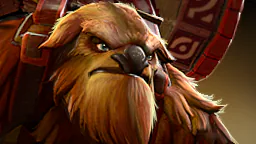
An  Earthshaker or a
 Magnus who has missed an initiation is the classic case, because the failure is public and the next ultimate is several minutes away. The correct move is to spend those minutes farming rather than looking for a redemption.
Interrupting the loop
The interruption is a task, not a thought. Go and take a camp. Buy a ward and place it. Walk to a different part of the map and clear a wave. Anything with a visible result resets the attention, and thirty seconds of it is usually enough.

Between matches, the rule is simpler: stop after two losses in a row. Not after three, and not after the one you are sure you would have won. The third match of a tilted evening is played worse than the first, and the Immortal guide explains why that arithmetic gets worse the longer matches run.
If you want to keep playing, change the mode. An unranked match, a Turbo match, or a lobby with the random hero tool picking a hero you have never played will all break the loop without costing anything. The practice guide has better uses for a bad evening than a fourth ranked queue.
Being the teammate nobody mutes
There is a version of you that four strangers are glad to play with, and it is not the friendly one — it is the specific one. Players follow short, concrete calls from anybody, including players they disagree with, because the call costs nothing to obey and has an obvious result.

Three habits do most of the work. Call objectives rather than asking for group. Say what you have rather than what somebody else lacks. And answer a mistake with the next action instead of the last one. A  Crystal Maiden who types the Roshan timer, notes the missing hero and names the tower is doing more for the team than one who is correct about whose fault the fight was.
A  Io is the extreme case: a hero that does not function at all without one other player agreeing to a plan. Everything above is the same skill at a lower intensity, and the roshan and tormentor timer is the sort of reference that turns a guess into a call once its constants are verified. A
 Glimmer Cape used on the right teammate at the right second is communication too, and it never needed a word.
The reward is measurable. A higher Behavior score means better teammates, better teammates mean shorter matches, and none of it affects your Medal / rank directly while all of it affects your MMR. In a Pub that is the whole bargain, and the ranked guide sets out the rest of the rules. Do not Dive into an argument for the same reason you would not dive a tower: the cost is certain and the reward is not.
Practice this

- Play three matches using only pings and the chat wheel, with the keyboard closed.
- Rebuild your chat wheel around the five phrases you actually use.
- Mute anyone who starts an argument within the first five minutes, every match, for a week.
- After each won fight, name an objective before you move.
- Note the first sign of tilt in your own play and go take a camp instead.
- Stop after two consecutive losses, every evening, with no exceptions.
Next reads

- Ranked matchmaking explained — where behavior score sits in the system.
- Climbing from Crusader to Legend — the band where calls change the most matches.
- How to practice Dota 2 — what to do with an evening that has gone wrong.
- Settings and keybinds that matter — binding pings and the wheel so they are fast.
- 25 mistakes every new player makes — several of them are communication rather than mechanics.
Heroes this affects


Items this affects
Common questions
Should I use voice chat?
Only if you are calm and brief. Voice is faster than typing and it is also where most arguments start, because tone carries. If you would not say it in three words on the chat wheel, it is probably not worth saying at all.
Is muting a teammate bad for the team?
No. Muting removes the text and the voice; it does not remove the pings, and pings carry almost everything a team needs. A muted teammate who is still pinging is a more useful teammate than an audible one you are arguing with.
Does typing 'gg' end the match?
No. A Dota match ends when the Ancient falls and nothing else ends it. Typing it early tells four teammates to stop trying, which is the closest thing to conceding that exists, and it costs matches that were still winnable.
How do I stop tilting after a bad lane?
Change the thing you are doing rather than the thing you are feeling. Take a camp, buy a ward, walk to a different part of the map. Tilt lives on repetition, and the fastest interruption is a different task with a visible result.
Will reporting actually do anything?
Yes, over time and in aggregate. One report changes little; a pattern of them moves an account's conduct score and eventually its matchmaking. Report, then mute, then stop thinking about it, which is the part that protects your own evening.
My teammates never listen. Why bother?
Because a large share of them do listen when the message is short, specific and about the next thirty seconds. Requests to group are ignored; the name of a tower is not. Change what you say before you decide nobody is listening.
Patch 7.41Checked on Sep 23, 2026