How to Last Hit and Deny in Dota 2
Last hitting in Dota 2 from the first click: attack animations, reading the health bar, Quelling Blade, denying, tower last hits, and a lobby drill that works.
· Patch 7.41
This page was checked against patch 7.41 and the current patch is 7.41f. The explanation still holds, but any number on it may have moved.
A Last hit is the attack that kills a creep, and it is the only attack on that creep that pays gold. A Deny is the last hit on your own creep, which takes that gold from the enemy and cuts the experience the enemy gets from it. Every lane, every farming route and every core's item timing is built out of these two clicks. This guide teaches the click itself. It covers the delay between your command and the hit, how to read the health bar, and which items make it easier. Then denying, the click under a tower, and a drill that turns the timing into a habit. Last hitting and denying explains who gets paid and by how much; this guide is the practice.
- The hit lands after a delay you can learn. Click before the creep is ready, not when it is.
- Read the health bar against your own damage, not against the creep's remaining health alone.
- Quelling Blade and a stat item make the window wider. Buy them before anything else on most cores.
- Denies start below half health. Watch your own creeps as closely as the enemy's.
- Under a tower, count the tower's hits and take the creep after the right one.
What the click pays
Only the unit that lands the killing blow on a creep earns its gold, and the gold is the main income of every core in the first ten minutes. Experience is different: every hero near a dying enemy creep shares it, whether or not it landed the hit. Gold and bounties has the bounties by creep type and Experience and levels the sharing rules. The practical result is that a carry who misses last hits is behind in gold but not in level. A support who takes last hits from the carry is taking gold that was meant for items. A core's Farm is the sum of these clicks, and nothing else in the first ten minutes pays as steadily.
The ranged creep is the prize in every wave. It has less health than the melee creeps and pays more, so both the carry and the enemy support want it, and it usually dies first. The three melee creeps come next, and the siege creep that joins the wave every few waves after the first few minutes is worth the most of all; Creeps and creep equilibrium explains when it arrives. Each wave lasts a short while, and a hero that takes every creep in a wave has earned the most it can from that wave.
A deny takes the creep's gold away entirely and leaves the enemy with a reduced share of its experience. Ten denies over a lane is an item's worth of gold the enemy carry never sees, and a level the enemy reaches later than you. Denying is not a support-only job: a carry that has taken the enemy creep and sees its own creep dying should deny it before the next last hit.
The delay between click and hit
Every attack has a windup before the hit lands, the Cast point of the attack, and a Backswing after it that you can cancel by moving. Ranged heroes add a projectile that has to fly to the target. The total delay is why a last hit clicked at the moment the creep "looks ready" lands after the creep has died to your own wave. Attack speed and base attack time explains the animation in detail, and the hero page for each hero lists its attack point and projectile speed in the quick facts.
The delay is fixed for a hero, so it can be learned. On a hero with a fast animation and no projectile, such as  Anti-Mage or
 Wraith King, the click comes a moment before the creep is ready. On a hero with a slow animation, such as
 Tiny, or a slow projectile, such as
 Spectre, the click comes noticeably earlier, and the creep must be at higher health when you commit. The mistake almost every beginner makes is switching heroes every match, which resets the habit; pick one hero for the drill and stay on it until the timing is yours.
Animation cancel is the trick that hides the delay. After the hit lands, click to move; the backswing stops and the hero is free to walk, so you can take a last hit and step back before the enemy support's attack arrives. Canceling too early, before the hit lands, cancels the hit itself and is the second most common reason a last hit misses. The stop key does the same job as a move click and is safer, because it never walks the hero forward.
Attack speed changes the rhythm but not the delay: a hero with more attack speed can attack again sooner, which matters when two creeps die at once, but the time from click to hit is set by the attack point alone. Turn rate matters too; a hero facing away from the creep turns first, and heroes with slow turns miss last hits on the wrong side of the wave. Stand facing the wave.
Reading the health bar
The question is never "how much health does the creep have" but "will my next attack kill it". Learn your own damage at level 1 from the hero page, or read it from the HUD, and compare it with the health bar. The health bar shows segments, and the settings guide explains how to make each segment a fixed amount so that the bar reads as a number without a tooltip. Once you can see that the creep has less health than your damage, the click is easy; the only skill left is the delay.
Your creeps and the enemy's creeps are hitting the wave at the same time, so the health you see is not the health that will be there when your hit lands. Watch which allied creeps are attacking the creep you want, and subtract a creep attack or two from the bar. The ranged creep's attack is the one that most often steals a last hit, because its projectile is in the air when you decide.
Armor and physical damage explains why the same attack takes less from a melee creep than from a ranged one, and why a creep that has been hit by an armor-reducing ability dies to fewer hits. The damage calculator gives the exact number for your hero against a creep at any level if you want to check your reading.
Evasion, accuracy and critical strike matters for one reason here: a random critical strike kills a creep you were waiting on, and a support with a critical-strike hero next to the wave pushes the lane without meaning to. Heroes whose passives trigger on attack should attack only what is about to die.
Items that widen the window
The  Quelling Blade adds damage against creeps, which makes every last-hit window wider and turns a missed timing into a hit. Every melee core buys it at the start. Ranged heroes get a smaller bonus and usually buy stats instead. Alongside it, an
 Iron Branch or two gives a little damage and health for almost nothing, and a
 Tango keeps you in lane long enough to use them.
The next step is raw damage.  Blades of Attack is the cheapest pure damage in the shop and the first component of the boots that give more; a
 Wraith Band gives Agility heroes damage and a little of everything else. Strength heroes take a
 Gauntlets of Strength or a
 Stout Shield and last hit with their higher base damage, which is why
 Sven and
 Dragon Knight are easier to last hit on than most Agility carries. Agility heroes start with
 Slippers of Agility for the same reason.
 Power Treads set to Agility add damage on most cores and attack speed on all of them, which is why they are usually the first real item.
 Hand of Midas is the last-hitting item that skips the click altogether: it kills a creep outright and pays extra gold and experience, on a long cooldown, and the farming patterns guide explains who buys it. The itemization guide puts these choices in order for each position.
Denying
You can attack your own creep only once it has less than half of its health. Below that line, the deny is a last hit like any other, with the same delay and the same reading of the bar. The window is shorter, because the enemy carry is also trying to take the creep. So the deny is usually clicked at slightly higher health than a last hit, and often with a spell rather than an attack.

Supports deny more than cores because they are not competing for the last hit. A  Crystal Maiden standing beside the carry's wave takes the deny on the ranged creep the moment it drops below the line, while the carry takes the enemy's creeps. Use the deny key or force-attack on your own creep, since a plain click on an allied unit moves you toward it instead. The settings guide covers the bind.
Denying moves the wave toward you. Every creep you deny is a creep the enemy's wave did not have to kill, so the enemy wave arrives at your side with more creeps alive, and the meeting point drifts toward your tower. That is the deny's second value: it produces a Lane freeze for the carry without a pull. A support who pulls, denies and never attacks the wave has given the carry a safe lane for ten minutes.
Denying also works on towers and on heroes under specific conditions, which Last hitting and denying lists. In the lane, the one that matters is the ranged creep deny at the moment the enemy carry steps up for it, because a denied creep is also a trade the carry took for nothing.
Under a tower
When the wave is pushed under your own tower, the tower is your rival for every last hit. A tower attack takes a large fixed bite out of a creep, so the timing becomes counting rather than reading: the tower hits, you hit, the creep dies. In the common early-game case, a ranged creep dies to one tower hit and one hero attack. A melee creep takes two tower hits and one hero attack, with the hero attack landing between the tower's hits. Verify it on your own hero at the start of a match, because base damage changes the count.
The extra tool under a tower is attacking the creep before the tower reaches it, so that it drops into the range the tower's hit will finish, and then taking the kill. Ranged heroes do this easily; melee heroes step forward for the pre-hit and back for the kill. If the enemy support is diving to deny under your tower, use Tower aggro in reverse: an attack on the support makes the tower attack them.
Buildings lists the targeting rules, and High ground and uphill miss explains why a ranged hero shooting up at a tier 2 tower's creeps misses some of its attacks; the last-hit reading above a ramp needs an extra hit's margin. A Creep aggro pull in the other direction, dragging the wave back out of the tower's range, restores the normal window when the wave is too close to the tower to be worth it.
Heroes that make it easy or hard
The hero decides how hard the click is.  Sniper and
 Drow Ranger have fast projectiles and comfortable range, which is why the first-hero guide lists them for beginners. Wraith King has high base damage and a fast animation.
 Lina has a slow animation and a slow projectile and is the classic hero people learn timing on the hard way.
 Medusa has a low damage start and needs the stat items;
 Faceless Void has a short windup and a fast hit.
The hero comparison tool puts two heroes' base damage, attack point and projectile speed side by side, which is the fastest way to know why a new hero feels wrong for the first few waves. Read the numbers, and adjust the click earlier or later before you play the hero in a real match.
Practice this
- Run the last-hit drill in a lobby: one hero, no enemies, ten minutes. Count last hits and denies on the scoreboard, and write both down. The practice guide explains the lobby settings.
- Repeat the drill with an enemy hero pushing the wave, which the lobby settings allow, so that the wave sits under your tower for half of it.
- Play five matches on one hero and count last hits at the ten-minute mark. Compare with the drill.
- Set the health-bar segments to a fixed size and read the ranged creep's bar out loud for one match.
- Practice animation-canceling with the stop key after every hit for a full lobby drill.
- Play one match as a support and deny every ranged creep you can. Count the denies at ten minutes.
Next reads
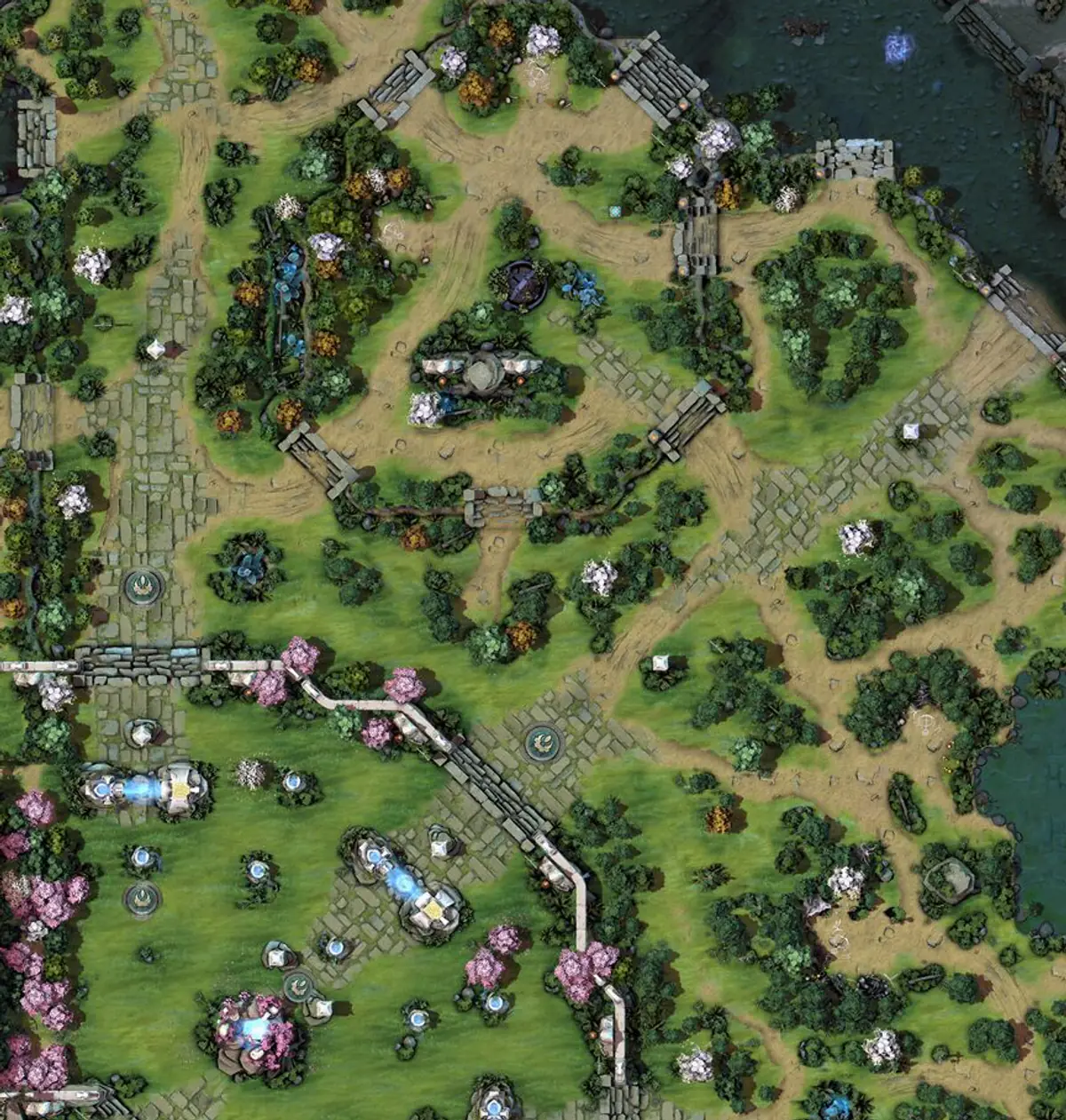
- The laning phase — where the wave sits, the aggro rules, and trading around the last hit.
- Farming patterns — the routes and the farming items, from minute seven on.
- How to play carry and how to play mid — the two positions where the click decides the match.
- Common beginner mistakes — the lane mistakes that lose last hits without you noticing.
Heroes this affects




Items this affects
Common questions
Why do I keep missing last hits by a fraction of a second?
Because you click when the creep looks ready instead of when your attack would land. Every hero has a delay between the click and the hit, plus a projectile flight time if the hero is ranged. Click earlier by that much, and practice on one hero until the delay is a habit.
Can I deny my own creeps at any health?
No. Your own creeps can only be attacked once their health is below half. Above that the attack command does nothing, so the deny window is shorter than the last-hit window and you have to be ready before it opens.
Is Quelling Blade worth buying on a ranged hero?
Rarely. The item gives its full bonus only to melee heroes and a smaller one to ranged heroes, so a ranged hero gets more from a stat item at the same price. Buy it on a ranged hero only when the hero's base damage is very low and the lane is uncontested.
How many last hits should I have at ten minutes?
Enough to say that most of the creeps that died on your side of the lane died to you. A quiet lane gives a carry most of them; a contested lane gives fewer to both sides. Measure the share and the trend across matches, not one number.
Does the Quelling Blade bonus work on towers?
No. It adds damage against creeps only, and it does not apply to buildings or heroes. Tower last hits and denies use your hero's own damage.
Patch 7.41Checked on Sep 15, 2026