Hero complexity and roles
How Dota 2 rates heroes in 7.41: Valve's complexity 1 to 3, the nine roles and their bars, and how they differ from the community's positions 1 to 5.
· Patch 7.41
This page was checked against patch 7.41 and the current patch is 7.41f. The explanation still holds, but any number on it may have moved.
Every Dota 2 hero carries two ratings from Valve: a complexity score from 1 to 3, and a set of roles drawn from nine names, each with a strength from 0 to 3. Neither rating is a position. This page explains what each one measures, how the site draws them, why they differ from the positions 1 to 5 that players talk about, and how to use them when choosing what to play.
- Complexity 1 to 3 is Valve's difficulty rating, shown as filled diamonds.
- Nine roles: Carry, Support, Nuker, Disabler, Jungler, Durable, Escape, Pusher, Initiator, each with a bar from 0 to 3.
- Positions 1 to 5 are a community convention about farm priority and lane, not a Valve rating.
- No current hero has the Jungler role.
Complexity
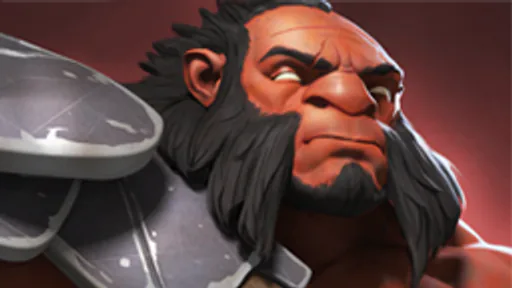
Complexity is Valve's own rating of how hard a hero is to play well, on a scale of 1 to 3. This site shows it as filled diamonds, as the game does. It measures the number of decisions and the mechanical precision a hero demands, not the hero's strength.  Axe is complexity 1 and wins games at every rank;
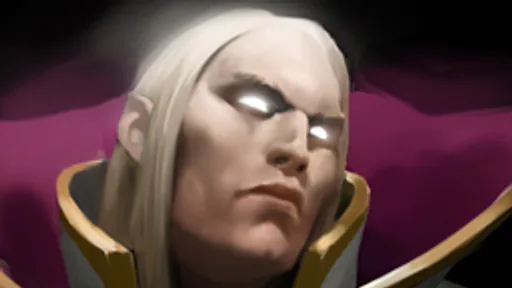
 Invoker is complexity 3 and loses games at every rank in the wrong hands.
| Complexity | Heroes | Examples |
|---|---|---|
| Simple | 55 | Abaddon, Alchemist, Anti-Mage, Axe |
| Moderate | 59 | Ancient Apparition, Bane, Batrider, Beastmaster |
| Complex | 13 | Arc Warden, Brewmaster, Chen, Earth Spirit |
Valve's own complexity rating across the roster.
Roughly half of the roster sits at complexity 1, most of the rest at 2, and a small group at 3. The complexity-3 group is a list of heroes whose kits ask for something unusual:  Meepo controls several bodies,
 Chen and
 Io control other units or tether to allies,
 Earth Spirit places and uses remnants, Invoker combines orbs. The hardest heroes guide covers every complexity-3 hero and how to learn it, and the first hero guide picks twelve complexity-1 heroes across positions.
The nine roles
Valve tags every hero with one or more of nine roles and gives each a level from 0 to 3. On this site the levels are drawn as nine small bars in a fixed order, so two heroes can be compared at a glance:
| Role | What it means in the kit |
|---|---|
| Carry | Scales with items and levels into the strongest hero late |
| Support | Kit helps allies: heals, saves, buffs, vision |
| Nuker | Burst damage from spells |
| Disabler | Stuns, hexes, roots and other control |
| Jungler | Can farm neutral camps early (no current hero) |
| Durable | Survives focus: health, armor, self-healing |
| Escape | Mobility or invisibility to get out |
| Pusher | Kills buildings and waves fast |
| Initiator | Starts fights with a reliable opening move |
The roles describe what the abilities do, not how a team uses the hero.  Abaddon carries both Support and Carry tags because his kit heals allies and also scales;
 Lion is a Disabler and Nuker whether he is played with farm or without.
| Roles | Heroes | Share of roster |
|---|---|---|
| Disabler | 95 | 74.8% |
| Nuker | 89 | 70.1% |
| Carry | 72 | 56.7% |
| Initiator | 55 | 43.3% |
| Escape | 53 | 41.7% |
| Durable | 50 | 39.4% |
| Support | 48 | 37.8% |
| Pusher | 29 | 22.8% |
How many heroes carry each role, out of the full roster.
The Jungler role exists in the data and no hero has it. That is not a data gap; it reflects the game. Since the 7.33 map changes the jungle is farmed by cores between waves rather than by a dedicated fifth hero, and Valve has not tagged any hero for it. The role list on the heroes hub therefore has no Jungler page.
Positions versus roles
Players do not say "I play Disabler"; they say "I play position 4". Positions 1 to 5 are a community convention about who gets the farm. Position 1 is the carry who takes the safe lane and the most gold, position 2 the mid, and position 3 the offlaner. Positions 4 and 5 are the two supports with the least. The full model is on Lanes and positions and in the positions guide.
The two systems overlap but do not map one to one:
- Valve's Carry role usually means position 1 or 2, but
 Sniper carries the tag and is also played as a position 4 or 5 in some patches.
- Valve's Support role usually means position 4 or 5, but a Support-tagged hero can be a position 3 or even a mid when the patch favors it.
- Initiator and Durable heroes cluster in the offlane, and Escape and Nuker in mid, but every rule has exceptions in every patch.
This site records the positions each hero is actually played in separately from Valve's roles, editorially, and cross-checks them against where the hero shows up in real games. The hero page header shows both: the role bars from Valve, and position chips from the editors.
Reading the ratings when you pick
Complexity tells you how much practice a hero needs before it does what you intend. Roles tell you what the hero's kit is for. Positions tell you where your team expects you to stand. When you choose:
- New to the game: filter for complexity 1, then pick by role you enjoy: Durable if you like being in the fight, Nuker if you like spells, Support if you like helping.
 Crystal Maiden and Axe are the classic first picks for opposite reasons.
- Filling a draft: the position your team lacks matters more than any role bar. A Disabler is useful in every position.
- Learning a hard hero: expect a complexity-3 hero to take dozens of games before it stops losing you matches; the hardest heroes guide is honest about which ones.
The random hero tool filters by complexity, role and position, and the hero comparison tool puts two heroes' role bars next to each other.
How it interacts with other mechanics
- Attributes are a separate axis: a Strength hero can be a Carry, a Support or both; see Attributes: Strength, Agility, Intelligence, Universal.
- Innates and talents are where a hero's role tags are usually expressed in the kit; see Innate abilities and Talents.
- Illusions and summons heroes such as Meepo and Chen are complexity 3 largely because of unit control; see Illusions and summons.
 Anti-Mage is complexity 1 with a Carry bar at maximum, which is exactly the profile the first-hero guide recommends for someone who wants to learn last hitting.
Common mistakes
- Reading complexity as strength. A complexity-1 hero is not a weak hero.
- Reading the Support role as "must be position 5". Check the position chips on the hero page.
- Looking for a Jungler. The role is empty; farm the jungle as a core between waves instead.
- Picking a complexity-3 hero in ranked before practicing it. The rating exists to warn you.
Heroes this matters for
Invoker — complexity three, the reference hard hero
Meepo — complexity three
Chen — complexity three micro hero
Axe — complexity one initiator
Sniper — complexity one carry

Crystal Maiden — complexity one support
Wraith King — complexity one durable carry

Mirana — a flexible multi-role hero
Items this matters for

Observer Ward — the support role's defining purchase

Blink Dagger — the initiator role's defining purchase

Battle Fury — the carry role's farming item

Black King Bar — the core's fight item
Heroes this affects


Common questions
What does hero complexity mean?
Valve's rating of how hard a hero is to play, from 1 to 3, shown as diamonds. It measures mechanical and decision difficulty, not how strong the hero is.
Is Valve's Support role the same as position 5?
No. Valve's roles describe what a hero's kit does; positions describe where a team puts a hero and how much farm it gets. A hero with the Support role can be played as a core and vice versa.
Why does no hero have the Jungler role?
The role still exists in the data, but no current hero is assigned to it. Jungling as a fifth position has not been viable since the 7.33 map changes.
Which heroes are best for beginners?
Complexity-1 heroes with simple, reliable abilities. The first-hero guide lists twelve across all positions with reasons.
Patch 7.41Checked on Sep 15, 2026